Appendix M — Track 2 in Detail
8. Track 2: Enrollment Pathways (W2)
Track 2 informs ARDC investment decisions outside the licensed core: where adjacent and digital communities are already active, where participation is latent but reachable, and where funding can increase meaningful experimentation and contribution before the Initial Grant boundary.
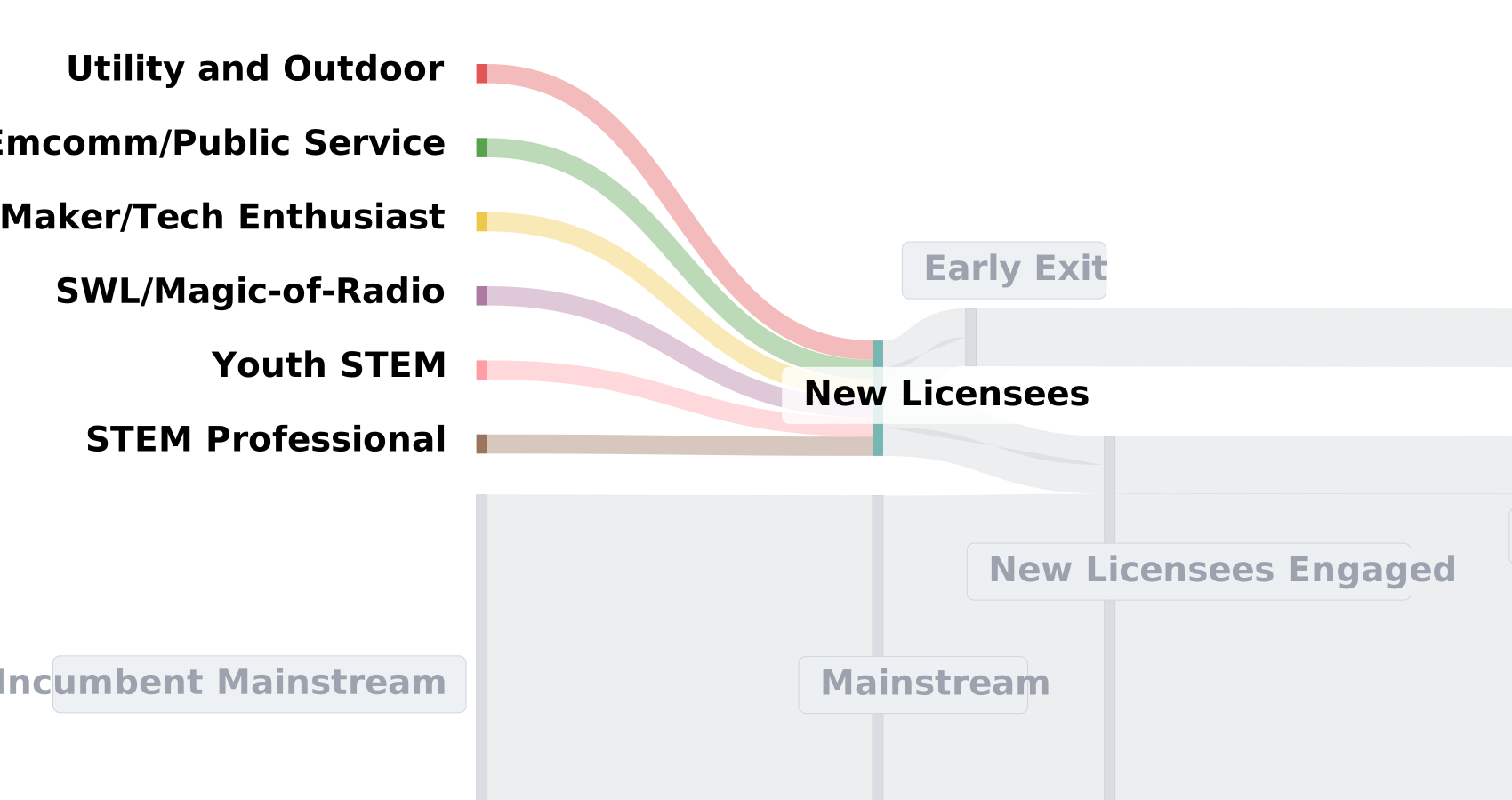
Exhibit 8.1. Track 2 focus view (becoming licensed): source pathways into initial licensing, with muted downstream context.
This track is intentionally segmented. There is no single master list equivalent to FCC ULS across adjacent and digital communities, so evidence is built through a multi-source access strategy with explicit confidence limits by segment and source.
Track 2 success is broader than conversion to licensed amateur radio alone. Conversion is one useful metric; the larger success frame is movement along a learn-experiment-do continuum in mission-aligned pathways.
8.1 Recommended Segment Priorities (from quarry scope)
- STEM and maker communities (educators, students, robotics participants, makerspaces)
- Consumer and specialized radio users (GMRS/FRS and related radio hobby communities)
- Emergency preparedness and community-service volunteers
- Digital communications practitioners (open-source contributors, SDR researchers, mesh experimenters, technical developers)
The general population benchmark remains optional and directional, not the center of Track 2.
Exhibit 8.2 is the Track 2 mental model: fragmented access paths, source qualification, and confidence-bounded synthesis.
Track 2 Workflow — Adjacent, DC, and Optional Benchmark Populations
1. Segment Prioritization and Access Strategy
Define priority segments and feasible access paths across partner channels, screened panels, and targeted outreach.
2. Source Qualification and Inference Posture
Evaluate coverage, bias risk, and expected confidence by segment; set explicit limits on representativeness claims.
→Output to governance: approved Track 2 source strategy and confidence assumptions.
3. Track 2 Qualitative Input and Instrument Design
Use segment-specific qualitative signal to shape batteries, language, and pathway-focused measures.
4. Multi-Channel Fielding and Quality Monitoring
Execute by segment with channel-level performance tracking, bias checks, and optional benchmark module activation.
5. Cross-Segment Synthesis and Track 2 Reporting
Deliver opportunity mapping, message/pathway guidance, and decision recommendations with explicit inference boundaries.
→Output to integration: Track 2 Decision Kit inputs, partner strategy implications, and continuity metric candidates.
Exhibit 8.2. Track 2 vertical workflow, emphasizing fragmented population access, source qualification, and confidence-bounded synthesis distinct from Track 1's single-frame design.
8.2 Track 2 Decision Outputs
- Segment-prioritized opportunity map across adjacent and practitioner communities
- Confidence-bounded findings on pathways, messages, and partner routes
- DC Community Report and Track 2 survey synthesis with explicit inference limits
- Track 2 Decision Kit component integrated with Track 1 at final synthesis
Track 2 normalizes fragmented population work while keeping claims appropriately bounded, so ARDC can act without overclaiming representativeness.